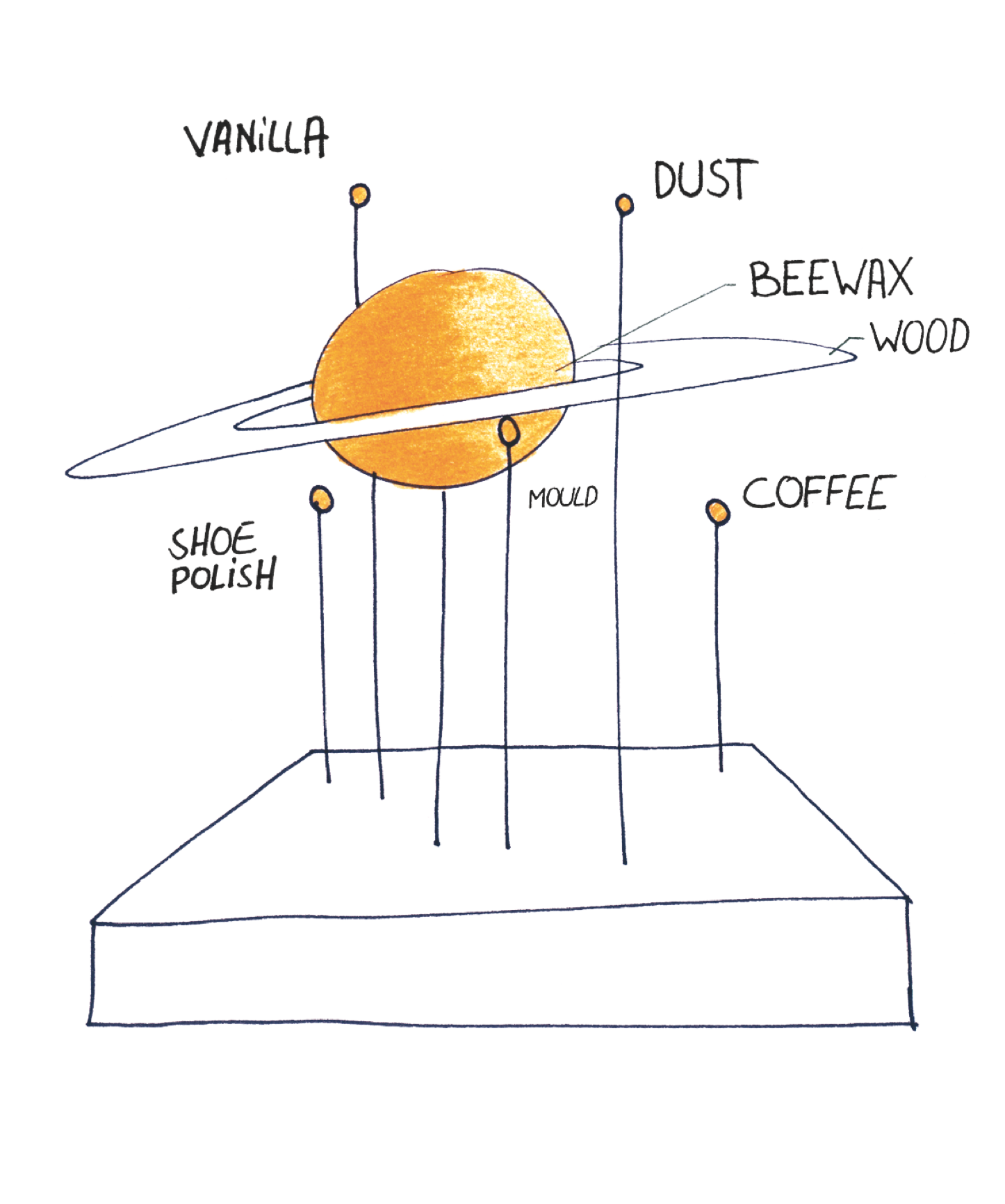
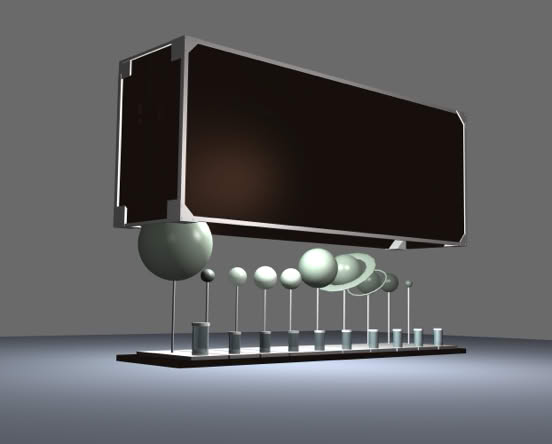
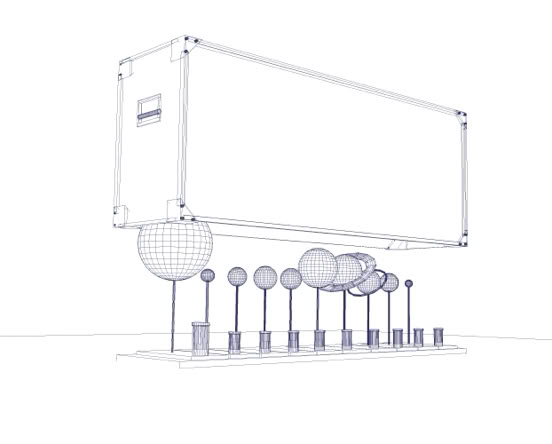
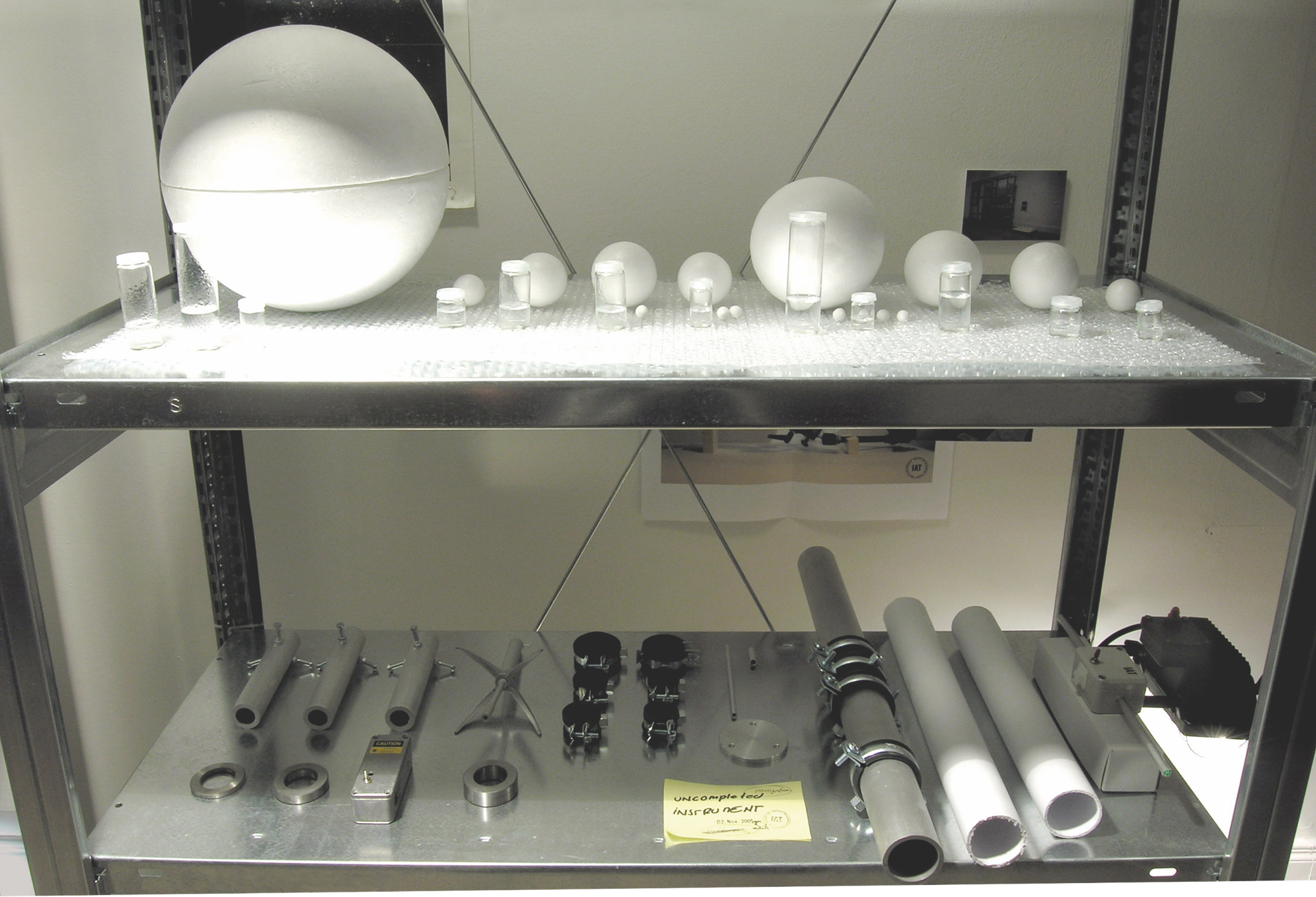
Assuming that we have access to the highest resolution of familiar smells on our own planet, this experiencable knowledge diminishes very quickly as we move out into the universe. According to accounts, the NASA astronaut Alan Bean reported in a conference that his space suit smelt like rotten eggs after a moon walk¹.
If one decodes the composition of astronomical objects using scientific procedures, it should be possible to reproduce the approximate smell of other worlds from terrestrial substances.
How it smells on Mars, Venus, Saturn and Pluto, respectively, or if the outer areas of the
Milky Way smell like pine – to fill all this with content remains a challenge to our powers of imagination.
Ausgehend davon, dass wir auf unserem Planeten die höchste Auflösung an uns vertrauten Gerüchen besitzen, nimmt dieses erfahrbare Wissen Richtung Weltraum rasend schnell ab. Angaben zufolge berichtete der NASA-Astronaut Alan Bean auf einer Konferenz, dass sein Raumanzug
nach einem Mondspaziergang nach fauligen Eiern gerochen hätte¹.
Decodiert man die Zusammensetzung astronomischer Objekte durch wissen- schaftliche Verfahren, sollte es möglich sein, aus terrestrischen Substanzen einen ungefähren Geruch anderer Welten zu reproduzieren.
Wie es auf Mars, Venus, Saturn oder Pluto riecht bzw. ob die äußeren Bereiche der Milchstrasse nach Tanne duften – all dies mit Inhalt zu füllen bleibt zunächst noch Aufgabe unserer Vorstellungskraft.